
No More Cover-Ups: Achieving True Odor Elimination with Expert

After a biohazard event, a smell can linger due to the presence of bacteria, viruses, and decaying organic material. These substances release volatile organic compounds (VOCs) and other gases, including ammonia and sulfur compounds, which have strong, unpleasant odors. The smell is a result of the breakdown of proteins, fats, and carbohydrates in organic material, often accelerated by bacteria and other microorganisms. Proper cleaning and decontamination are crucial after a biohazard to remove these materials and eliminate the sources of the odor, ensuring safety and hygiene.
Okay, but your real question is likely: What can you expect to smell when everything is said and done?
Many are expecting either a very harsh chemical odor or the other extreme of a light flowery smell. Neither is the case when T.A.C.T. is called to assist in a remediation and this is why. Cleaning an odor really means identifying and removing the source of the smell. T.A.C.T. uses proprietary chemicals that consist of an enzyme and emulsifier compound that has 200 billion count bacteria to break down waste, and a tuberculocide and virucide that kills blood borne pathogens. While extremely powerful, the products themselves are not overly odorous. We do not add additional scents either which only add a temporarily fragrance within the space, but it really has no useful effect. When a remediation is complete, the location is left with a simple, clean smell.
If you have a lingering odor in your home, call T.A.C.T. to get rid of it once and for all.


Call Today
(623) 462-1777
(520) 523-3171

Latest news

Read how T.A.C.T. 48 / AZ / Ft Worth's relentless hard work and innovative strategies have led them to be highlighted in a prestigious Esquire Magazine article.
Read More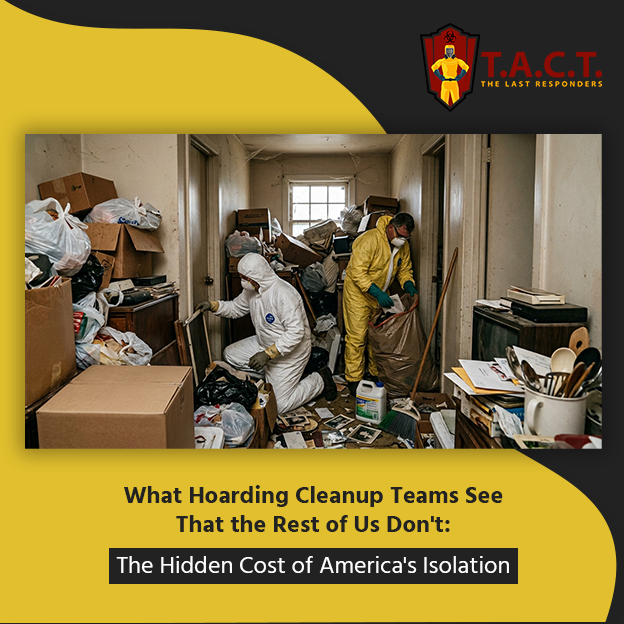
Following Esquire's recent look inside the world of trauma remediation, T.A.C.T. 48 founder David Lesaffre says the homes his teams enter reveal a deeper problem: what can happen when isolation, loss and disconnection accumulate behind closed doors.
Read More
Explore our blog's latest insights from July's Chronicles, featuring stories on who cleans up after the police leave, a day-in-the-life of our techinician and where does biohazardous waste go.
Read More